Intro
Cat feeding schedule 2026 is essential knowledge for every cat owner. Whether you have a kitten or a senior cat, following a proper cat feeding schedule 2026 can prevent obesity and urinary issues. Unlike dogs, cats are natural grazers with unique metabolic needs. Getting the frequency and portion size right prevents obesity, urinary issues, and digestive problems. This cat feeding schedule guide will provide clear, age‑based charts for kittens, adults, and seniors, plus tips on wet vs dry food, portion control, and transitioning between life stages.
Why a Consistent Feeding Schedule Matters
Cats thrive on routine. Regular meal times:
- Regulate digestion and prevent bilious vomiting (empty stomach syndrome).
- Help manage weight and prevent obesity (affects 60% of cats).
- Make it easier to monitor appetite changes (early sign of illness).
- Reduce stress and food‑related aggression in multi‑cat homes.
Veterinarians at AVMA recommend scheduled meals rather than free‑feeding for most cats. This is why every owner needs a reliable cat feeding schedule 2026 tailored to their pet.
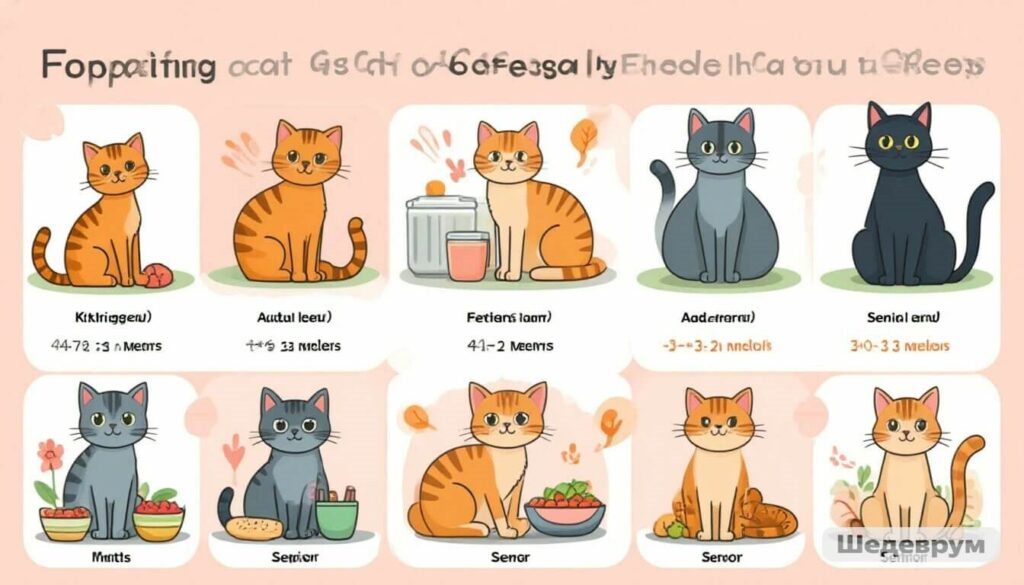
Feeding Frequency by Age
| Age | Meals per Day | Notes |
|---|---|---|
| Kittens (0‑6 months) | 4‑6 small meals | Rapid growth, tiny stomachs. Free‑feeding high‑quality kitten kibble is acceptable, supplemented with wet food. |
| Kittens (6‑12 months) | 3‑4 meals | Transition to scheduled meals. Monitor growth and adjust portions. |
| Adult cats (1‑7 years) | 2‑3 meals | Gold standard: at least 2 meals, but 3‑4 smaller meals mimic natural grazing. |
| Senior cats (7+ years) | 2‑3 smaller meals | Metabolism slows; smaller meals aid digestion and kidney health. |
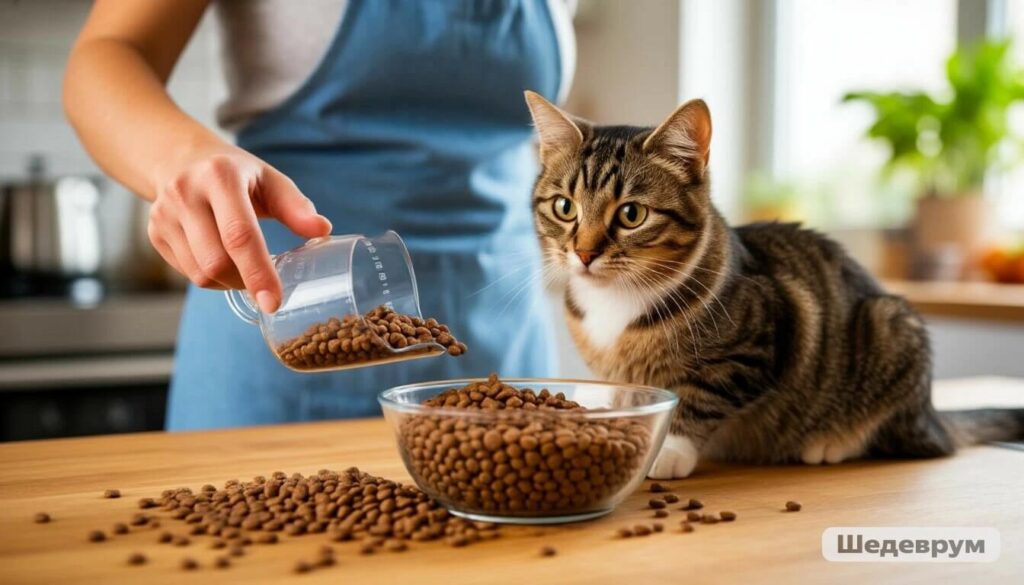
How Much to Feed: Portion Control Guide
General Guidelines
| Cat’s Weight | Daily Calories (approx.) | Dry Food (cups) | Wet Food (cans) |
|---|---|---|---|
| 5 lbs (2.3 kg) | 150‑180 | ⅓ | ½ (3 oz can) |
| 8 lbs (3.6 kg) | 200‑240 | ½ | ¾ (3 oz can) |
| 10 lbs (4.5 kg) | 220‑260 | ⅔ | 1 (3 oz can) |
| 12 lbs (5.4 kg) | 240‑280 | ¾ | 1 ¼ |
| 15 lbs (6.8 kg) | 280‑320 | 1 | 1 ½ |
Body Condition Score (BCS)
- Ideal: Ribs easily felt with thin fat cover, visible waist.
- Overweight: Ribs buried under fat, no waist → reduce portions by 10‑15%.
- Underweight: Ribs visible, no fat → increase portions by 10‑15%.
See our Best Smart Pet Scales 2026 guide to track weight accurately.
Wet Food vs Dry Food vs Mixed
| Type | Pros | Cons |
|---|---|---|
| Wet food | High moisture (prevents urinary crystals), palatable, lower carbs | More expensive, shorter shelf life after opening |
| Dry food | Convenient, economical, helps dental health | Low moisture, higher carbs |
| Mixed | Best of both worlds – hydration + convenience | Must calculate portions carefully |
Vet tip: Feeding at least one wet meal daily significantly reduces the risk of FLUTD and kidney disease.
Sample Feeding Schedules
Kitten (8‑12 weeks) – 4 meals
| Time | Meal |
|---|---|
| 7:00 AM | Wet food (¼ can) |
| 12:00 PM | Dry food (1 tbsp) |
| 5:00 PM | Wet food (¼ can) |
| 9:00 PM | Dry food (1 tbsp) |
Adult Cat (1‑7 years) – 2 meals
| Time | Meal |
|---|---|
| 8:00 AM | ½ daily portion (wet or dry) |
| 8:00 PM | ½ daily portion |
Adult Cat (1‑7 years) – 3 smaller meals
| Time | Meal |
|---|---|
| 7:00 AM | ⅓ daily portion |
| 2:00 PM | ⅓ daily portion |
| 9:00 PM | ⅓ daily portion |
Senior Cat (7+ years) – 3 meals
| Time | Meal |
|---|---|
| 8:00 AM | Small wet meal |
| 2:00 PM | Small dry snack |
| 8:00 PM | Main wet meal |
Transitioning Between Life Stages
Kitten to Adult Food (around 12 months)
- Gradual transition over 7‑10 days: 75% kitten + 25% adult → 50/50 → 25/75 → 100% adult.
- Use a high‑quality adult formula (lower fat, controlled calcium).
Adult to Senior Food (around 7‑8 years)
- Senior formulas have adjusted phosphorus, added joint support, and easier digestibility.
- See our Senior Cat Care Guide 2026 for more details.
Special Considerations
Weight Management
- Use a measuring cup or kitchen scale – never guess.
- Reduce portions by 10‑15% if overweight, increase if underweight.
- Limit treats to <10% of daily calories.
Multi‑Cat Households
- Feed separate bowls in different locations.
- Use microchip‑activated feeders if needed.
- See our Best Smart Cat Feeders 2026 guide for automated portion control.
Health Conditions
- FLUTD / urinary crystals: High‑moisture diet (canned food), low magnesium.
- Kidney disease: Prescription diet, increased water intake.
- Diabetes: Consistent meal times, low‑carb wet food.
Frequently Asked Questions
Is it OK to leave dry food out all day?
Free‑feeding dry food can lead to obesity and makes it hard to monitor appetite. Scheduled meals are better.
How many times a day should a cat eat?
Most adult cats do well with 2‑3 meals per day. Kittens need 4‑6.
Can cats eat once a day?
Not recommended. It can cause hunger‑induced vomiting and increase risk of hepatic lipidosis.
Should I feed my cat at the same time every day?
Yes. Consistency helps regulate digestion and reduces stress.
How do I know if I’m feeding the right amount?
Monitor body condition (ribs should be felt, not seen) and adjust portions accordingly.
Conclusion
Cat feeding schedule 2026 is about balancing frequency, portion size, and food type to match your cat’s age and health. We hope this cat feeding schedule 2026 guide helps you keep your feline friend healthy for years to come. By following this cat feeding schedule guide, you can prevent obesity, support urinary health, and ensure your feline friend thrives. For more on cat nutrition, explore our related guides: