Intro
Puppy training guide 2026 is essential reading for every new dog owner. Bringing home a puppy is exciting, but it also comes with challenges. Without proper training, that adorable puppy can grow into a dog with behavioral issues like excessive barking, chewing, jumping, and even aggression. The good news is that puppies are like sponges—they’re ready and eager to learn .
This comprehensive puppy training guide 2026 covers everything you need to know to raise a well-behaved, confident, and happy dog. We’ll explain the critical importance of early socialization, provide step-by-step instructions for housetraining and crate training, teach you how to master basic commands (sit, stay, come, leave it), and offer solutions to common puppy problems like biting and jumping. Whether you’re a first-time owner or an experienced handler, this guide will set you and your puppy up for success.
Why Training Matters: The Foundation of a Great Relationship
Benefits of Proper Training
| For Your Puppy | For You |
|---|---|
| Builds confidence and reduces anxiety | Creates a harmonious home environment |
| Provides mental stimulation (prevents boredom) | Strengthens your bond |
| Teaches impulse control | Makes daily life easier and less stressful |
| Prevents behavior problems later | Keeps your puppy safe |
| Makes vet visits and handling less stressful | Allows you to take your dog more places |
The Critical Window: Socialization Period (3-16 Weeks)
The first 16 weeks of your puppy’s life are a critical socialization window. During this time, puppies are most receptive to new experiences. Veterinary behaviorists at AVMA emphasize that proper socialization during this period can prevent fear and aggression later in life.
What to Socialize Your Puppy To:
- Different people (men, women, children, people in hats/uniforms)
- Other friendly, vaccinated dogs
- Various surfaces (grass, concrete, hardwood, stairs)
- Household noises (vacuum, doorbell, TV)
- Handling (paws, ears, mouth, grooming tools)
- Car rides
- Veterinary visits (make them positive!)
The Power of Positive Reinforcement
Modern training relies on positive reinforcement—rewarding desired behaviors to make them more likely to be repeated. This means:
- Using treats, praise, and play as rewards
- Ignoring unwanted behaviors (rather than punishing)
- Setting your puppy up for success
- Being consistent and patient
AAHA guidelines strongly recommend force-free, reward-based training methods, which are more effective and strengthen the human-animal bond.
Housetraining (Potty Training) Your Puppy
The Golden Rules of Housetraining
- Supervise constantly. If you can’t watch your puppy, they should be in a crate or confined area.
- Establish a routine. Puppies thrive on predictability.
- Take them out frequently. A general rule: a puppy can hold it for one hour per month of age (e.g., a 2-month-old can hold it for about 2 hours). Always take them out:
- First thing in the morning
- After meals (15-30 minutes)
- After naps
- After play sessions
- Before bedtime
- Use a designated potty spot. Take your puppy to the same spot each time. The scent will encourage them to go.
- Reward immediately. The moment your puppy finishes going potty in the right spot, throw a party! Give high-value treats, praise, and play. Timing is critical.
- Clean accidents thoroughly. Use an enzymatic cleaner to eliminate odors that might attract your puppy back to the same spot.
- Never punish accidents. If you find a mess, it’s already too late. Punishment will only teach your puppy to fear you. Clean it up and resolve to supervise better.
Sample Housetraining Schedule (8-12 Week Old Puppy)
| Time | Activity |
|---|---|
| 7:00 AM | Wake up, immediately take outside to potty |
| 7:15 AM | Breakfast |
| 7:45 AM | Take outside to potty again |
| 8:00 AM | Supervised playtime |
| 9:00 AM | Potty break, then crate time for nap |
| 12:00 PM | Potty break, lunch, then potty again |
| 1:00 PM | Supervised play/training |
| 2:00 PM | Potty break, crate time |
| 5:00 PM | Potty break, dinner, then potty again |
| 6:00 PM | Evening walk/play/training |
| 8:00 PM | Potty break |
| 10:00 PM | Last potty break, then crate for night |
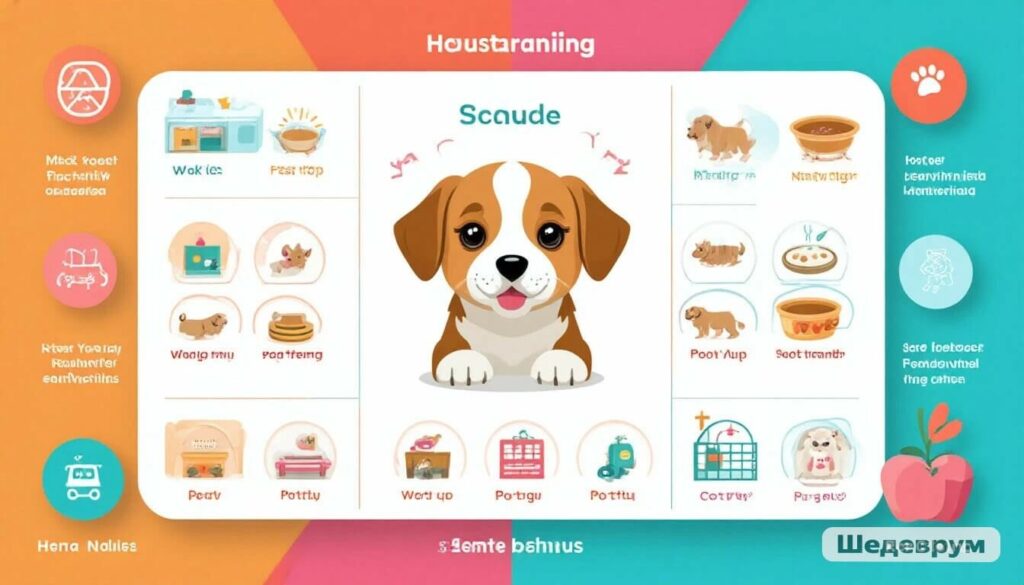
Crate Training: Creating a Safe Den
Why Use a Crate?
A crate isn’t a prison—it’s a safe, cozy den for your puppy. When used correctly, a crate:
- Aids in housetraining (dogs naturally avoid soiling their sleeping area)
- Prevents destructive chewing when you can’t supervise
- Provides a safe space for your puppy to retreat to
- Makes travel and vet visits less stressful
How to Crate Train Your Puppy
- Make the crate inviting. Place soft bedding and safe toys inside. Leave the door open and let your puppy explore at their own pace. Toss treats inside to create positive associations.
- Feed meals in the crate. This builds a strong positive connection.
- Start with short periods. Close the door for just a few minutes while you’re nearby. Gradually increase the duration.
- Practice at different times. Use the crate during calm times, not just when you’re leaving.
- Never use the crate as punishment. The crate should always be a happy place.
- Establish a bedtime routine. A potty break, then into the crate with a safe chew toy can help your puppy settle for the night.
Crate Training Do’s and Don’ts
| Do | Don’t |
|---|---|
| Make it comfortable with bedding | Use the crate for too long (puppies need frequent breaks) |
| Keep it in a family area | Force your puppy in |
| Give treats and toys in the crate | Let your puppy out when they’re crying (wait for a quiet moment) |
| Gradually increase crate time | Use it as punishment |
Teaching Basic Commands
1. Name Recognition
Before you can teach anything else, your puppy needs to know their name.
- Say their name in a happy, upbeat tone.
- When they look at you, mark the behavior with a word like “yes!” and give a treat.
- Practice in different rooms with different distractions.
2. Sit
- Hold a treat close to your puppy’s nose.
- Slowly move the treat up and back over their head. As their head goes up, their bottom will naturally lower.
- The moment their bottom touches the floor, say “yes!” and give the treat.
- Add the verbal cue “sit” just as they’re about to perform the action.
3. Down
- Start with your puppy in a sit.
- Hold a treat in your closed fist and let them sniff it.
- Slowly lower your hand straight down to the floor, between their front paws. Lure them into a lying down position.
- The moment they lie down, say “yes!” and give the treat.
- Add the verbal cue “down”.
4. Come (Recall)
This is a potentially life-saving command.
- Start in a quiet area with few distractions.
- Get your puppy’s attention, say “come!” in a happy, excited voice, and run backward a few steps.
- When they reach you, throw a party! Give multiple treats, praise, and play.
- Never call your puppy to you for something they dislike (like nail trims or bath time).
- Practice on a long leash in safe, fenced areas.
5. Leave It
This command teaches impulse control and can prevent your puppy from picking up dangerous objects.
- Hold a treat in your closed fist and let your puppy sniff, lick, and paw at it. Ignore these attempts.
- The moment they stop trying and move their head away, say “yes!” and give them a treat from your other hand.
- Repeat until your puppy consistently backs away from your fist.
- Next, place a treat on the floor under your foot. Allow your puppy to approach. The moment they back away, say “yes!” and reward with a different treat.
- Add the verbal cue “leave it”.
Training Tips
- Keep sessions short. 5-10 minutes, 2-3 times a day is ideal.
- End on a positive note. Always finish a session with something your puppy knows and can succeed at.
- Be patient. Every puppy learns at their own pace.
- Use high-value treats. Small, soft, smelly treats are most motivating.
- Consult professional trainers for personalized help with challenging behaviors.
Common Puppy Problems and Solutions
Biting and Mouthing
Puppies explore the world with their mouths and also bite during play. This is normal but needs to be managed.
- Provide appropriate chew toys. Redirect your puppy to a toy whenever they mouth you.
- Use “ouch!” If your puppy bites too hard during play, let out a high-pitched yelp and immediately stop playing. This mimics how other puppies communicate.
- Time-outs. If yelping doesn’t work, calmly leave the room or put your puppy in a brief time-out (30-60 seconds) to teach that biting ends the fun.
- Ensure enough exercise. A tired puppy is a well-behaved puppy.
Jumping Up
Puppies jump to greet people. They’re usually seeking attention.
- Turn away and ignore. The moment your puppy jumps, cross your arms, turn your back, and give no attention.
- Reward four on the floor. When all four paws are on the ground, turn back and give calm praise and attention.
- Teach an alternative behavior. Ask for a “sit” before greeting.
Chewing
Chewing is a natural puppy behavior, especially during teething.
- Puppy-proof your home. Keep shoes, cords, and valuables out of reach.
- Provide plenty of appropriate chews. Rotate toys to keep them interesting.
- Supervise or confine. When you can’t watch your puppy, use a crate or exercise pen.
- Use bitter apple spray. On furniture or objects you can’t move.
Barking
Excessive barking can be a nuisance. First, identify the cause.
- Alert barking: Acknowledge what they’re barking at, then ask for a “quiet” command and reward.
- Attention-seeking barking: Ignore completely. Only give attention when quiet.
- Boredom barking: Ensure adequate physical and mental exercise.
- Fear barking: Address the underlying fear, don’t punish.
Separation Anxiety
Some puppies struggle when left alone.
- Practice departures. Leave for very short periods (seconds) and gradually increase.
- Leave engaging toys. Puzzle toys stuffed with treats can keep them occupied.
- Don’t make a big deal. Keep arrivals and departures low-key.
- Consider a pet camera. To monitor your puppy’s behavior.
- Consult a veterinary behaviorist for severe cases.
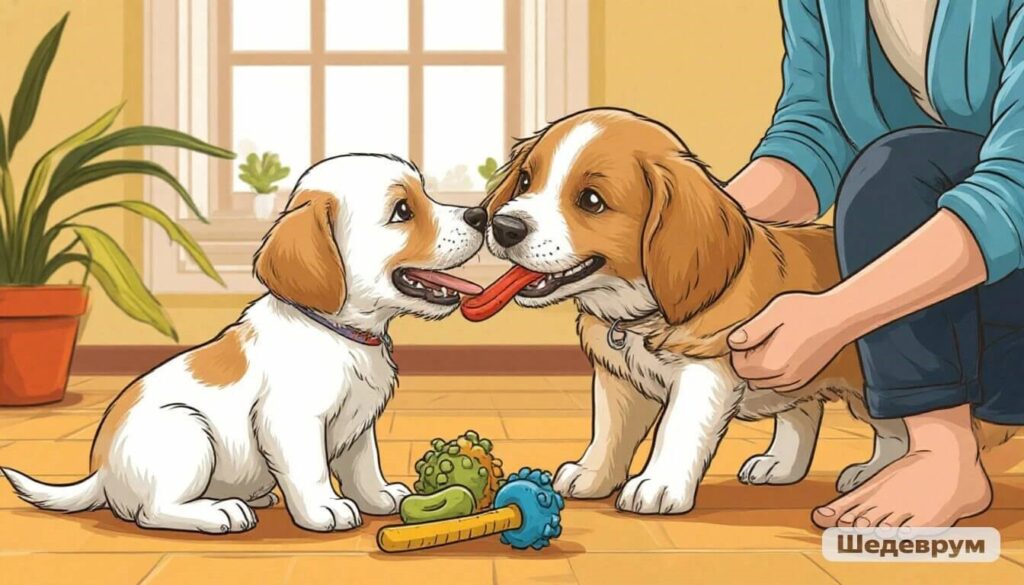
Puppy Training Classes: Are They Worth It?
Benefits of Group Classes
- Structured learning: Taught by experienced trainers.
- Socialization: Your puppy interacts with other puppies and people in a controlled environment.
- Distraction training: Learning to follow commands around other dogs is excellent practice.
- Owner education: You learn about dog behavior and training techniques.
How to Choose a Class
- Look for positive reinforcement-based methods (avoid trainers who use aversive tools like prong or shock collars).
- Ask about class size and instructor qualifications.
- Observe a class if possible.
- Ensure all puppies are healthy and appropriately vaccinated.
Frequently Asked Questions
At what age should I start training my puppy?
You can start as soon as you bring your puppy home, at 8 weeks old! Puppies are capable of learning simple commands and routines from a very young age .
How long does it take to housetrain a puppy?
Every puppy is different, but most can be reliably housetrained within 4-6 months with consistent effort. Smaller breeds may take longer.
My puppy cries in the crate at night. What should I do?
- Make sure they’ve had a potty break right before bed.
- Ensure the crate is comfortable and covered with a light blanket (if they don’t chew it).
- Place the crate in your bedroom so they can hear and smell you.
- If they cry, take them out for a quick potty break only (no play). Then return them to the crate. Do not give in to prolonged crying, or they’ll learn that crying gets them out.
Should I use puppy pads?
Veterinarians and trainers generally advise against puppy pads unless absolutely necessary (e.g., you live in a high-rise apartment). Pads teach your puppy it’s okay to go potty indoors, which can confuse them during housetraining. If you must use them, move them progressively closer to the door and eventually outside.
What are the best treats for training?
Small, soft, smelly treats are ideal because puppies can eat them quickly and stay focused. Look for treats with simple, high-quality ingredients. Break larger treats into tiny pea-sized pieces. You can also use your puppy’s regular kibble for training (just account for it in their daily food intake).
How do I stop my puppy from biting my hands and feet?
- Redirect to an appropriate toy.
- Stop playing and ignore them when they bite.
- Ensure they’re getting enough rest (overtired puppies are often nippier).
- Be consistent; everyone in the household should follow the same rules.
My adult dog has behavior problems. Can I still use these methods?
Absolutely! While it’s easiest to start young, adult dogs can learn new behaviors with patience and consistent positive reinforcement. You may need to work through existing habits, which can take longer, but it’s certainly possible.
Conclusion
Puppy training guide 2026 provides the foundation you need to raise a well-mannered, confident, and happy canine companion. By focusing on positive reinforcement, establishing routines, and being patient and consistent, you’ll build a strong bond with your puppy that will last a lifetime.
This puppy training guide 2026 covers the essentials: housetraining, crate training, basic commands, and solutions to common problems. For more in-depth information on related topics, check out our other guides: