Intro
What can dogs eat? This is a common question for pet owners. As a dog owner, you’ve probably been there… As a dog owner, you’ve probably been there—you’re eating a snack, and your furry friend gives you those irresistible puppy eyes. But before you share, you need to know: is this food safe for dogs? Some human foods are perfectly healthy for dogs, while others can be toxic or even life-threatening. This complete guide separates fact from fiction, giving you clear lists of safe and unsafe foods, plus practical tips for responsible treat-giving.
The Golden Rule of Sharing Food with Dogs
Before diving into specific foods, remember these three essential rules:
- Treats should never exceed 10% of your dog’s daily calories . The other 90% must come from a complete and balanced dog food.
- Every dog is different. What’s safe for one dog might cause digestive upset in another. Always introduce new foods slowly and in tiny amounts.
- When in doubt, leave it out. If you’re unsure whether a food is safe, don’t risk it.
✅ SAFE FOODS: What Dogs CAN Eat. What Can Dogs Eat? A Complete Guide to Safe Foods
Here are human foods that are generally safe for most dogs when prepared properly and fed in moderation. This section answers the question “what can dogs eat?” with a detailed list of safe fruits.

Fruits Dogs Can Eat
| Fruit | Safe? | Preparation Tips | More Info |
|---|---|---|---|
| Apples | ✅ Safe | Remove seeds and core; slice into bite-sized pieces | Full Guide: Can Dogs Eat Apples? |
| Bananas | ✅ Safe | Small pieces only; high in sugar | Full Guide: Can Dogs Eat Bananas? |
| Blueberries | ✅ Safe | Wash thoroughly; great as training treats | |
| Cantaloupe | ✅ Safe | Remove rind and seeds; small cubes | |
| Cranberries | ✅ Safe | Dried or fresh, unsweetened only | |
| Cucumber | ✅ Safe | Low-calorie; slice into rounds | |
| Mango | ✅ Safe | Remove pit and skin; small cubes | |
| Oranges | ✅ Safe | Remove seeds and peel; small segments only (citrus can upset some stomachs) | |
| Peaches | ✅ Safe | Remove pit completely; slice flesh only | |
| Pears | ✅ Safe | Remove seeds and core; slice | |
| Pineapple | ✅ Safe | Remove skin and core; fresh only, not canned | Full Guide: Can Dogs Eat Pineapple? |
| Pumpkin | ✅ Safe | Plain canned pumpkin (not pie filling); great for digestion | Full Guide: Can Dogs Eat Pumpkin? |
| Raspberries | ✅ Safe | Small amounts only (contain trace xylitol) | |
| Strawberries | ✅ Safe | Remove leaves; slice | Full Guide: Can Dogs Eat Strawberries? |
| Watermelon | ✅ Safe | Remove rind and seeds; seedless is best | Full Guide: Can Dogs Eat Watermelon? |
Vegetables Dogs Can Eat
| Vegetable | Safe? | Preparation Tips | More Info |
|---|---|---|---|
| Carrots | ✅ Safe | Raw or cooked; great for teeth | Full Guide: Can Dogs Eat Carrots? |
| Broccoli | ✅ Safe | Small amounts only (can cause gas); florets only | |
| Brussels Sprouts | ✅ Safe | Cooked, plain; may cause gas | |
| Cabbage | ✅ Safe | Cooked, plain; in moderation | |
| Cauliflower | ✅ Safe | Small amounts, cooked | |
| Celery | ✅ Safe | Chopped into small pieces | |
| Green Beans | ✅ Safe | Plain, cooked or raw; low-calorie | |
| Peas | ✅ Safe | Fresh or frozen; avoid canned with salt | |
| Spinach | ✅ Safe | Small amounts only (high in oxalic acid) | |
| Sweet Potatoes | ✅ Safe | Cooked, plain, no skin; excellent fiber source | |
| Zucchini | ✅ Safe | Sliced, raw or cooked |
Proteins Dogs Can Eat
| Protein | Safe? | Preparation Tips | More Info |
|---|---|---|---|
| Chicken | ✅ Safe | Plain, cooked, boneless, skinless | Full Guide: Can Dogs Eat Rice and Chicken? |
| Turkey | ✅ Safe | Plain, cooked, boneless, skinless | |
| Salmon | ✅ Safe | Cooked thoroughly (never raw); excellent omega-3s | |
| Tuna | ✅ Safe | In spring water only; once a week max | Full Guide: Can Dogs Eat Tuna? |
| Whitefish | ✅ Safe | Cooked, deboned | |
| Eggs | ✅ Safe | Cooked thoroughly; scrambled or boiled | Full Guide: Can Dogs Eat Eggs? |
| Plain Yogurt | ✅ Safe | Plain, unsweetened, no xylitol | Full Guide: Can Cats Eat Yogurt? |
| Plain Cottage Cheese | ✅ Safe | Small amounts; low-lactose option | |
| Lean Beef | ✅ Safe | Cooked, plain, low-fat |
Grains and Other Foods Dogs Can Eat
| Food | Safe? | Preparation Tips | More Info |
|---|---|---|---|
| Plain White Rice | ✅ Safe | Cooked, plain; good for upset stomachs | Full Guide:Can Dogs Eat Rice and Chicken? |
| Oatmeal | ✅ Safe | Cooked, plain; good fiber source | |
| Quinoa | ✅ Safe | Cooked, plain; protein-rich | |
| Plain Popcorn | ✅ Safe | Air-popped, no salt/butter; remove unpopped kernels | |
| Peanut Butter | ✅ Safe | Xylitol-free, unsalted, minimal | Full Guide: Can Dogs Eat Peanut Butter? |
❌ UNSAFE FOODS: What Dogs CANNOT Eat
These foods are dangerous for dogs and should never be fed—even in small amounts. Knowing what can dogs eat is just as important as knowing what they cannot eat.
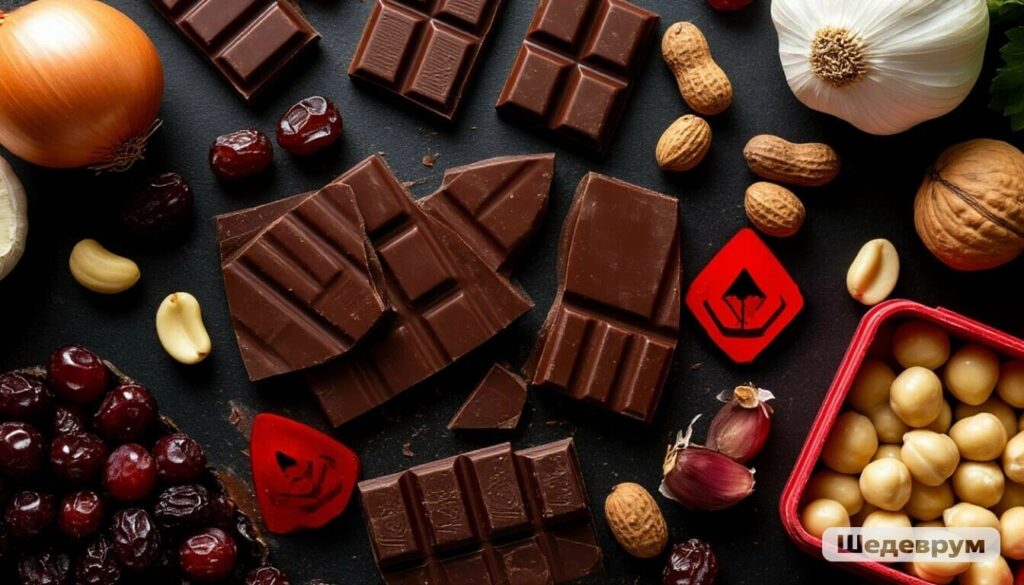
Foods That Are Toxic to Dogs
| Food | Why It’s Dangerous | Symptoms of Poisoning | More Info |
|---|---|---|---|
| Chocolate | Contains theobromine and caffeine—dogs cannot metabolize these | Vomiting, diarrhea, rapid breathing, seizures, death | Full Guide: Chocolate Toxicity in Dogs |
| Xylitol | Artificial sweetener; causes rapid insulin release | Weakness, collapse, seizures, liver failure | |
| Grapes & Raisins | Can cause acute kidney failure—even small amounts | Vomiting, lethargy, decreased urination | Full Guide: Can Dogs Eat Grapes? |
| Onions & Garlic | Damages red blood cells, causing anemia | Weakness, pale gums, rapid breathing | Full Guide: Onion and Garlic Toxicity |
| Macadamia Nuts | Cause weakness, vomiting, hyperthermia | Weakness (especially hind legs), vomiting | |
| Alcohol | Extremely toxic—affects brain and liver | Vomiting, disorientation, breathing difficulty, coma | |
| Coffee & Caffeine | Stimulates nervous system dangerously | Restlessness, rapid breathing, tremors | |
| Yeast Dough | Expands in stomach, produces alcohol | Bloating, pain, alcohol poisoning |
Foods That Are Unsafe for Other Reasons
| Food | Why to Avoid |
|---|---|
| Cooked Bones | Splinter easily; can perforate digestive tract |
| Raw Meat/Fish | Risk of Salmonella, E. coli; raw fish contains thiaminase |
| Fatty Trimmings | Can trigger pancreatitis |
| Salt in Excess | Sodium ion poisoning (thirst, vomiting, seizures) |
| Nutmeg | Contains myristicin; causes hallucinations, seizures |
| Avocado | Contains persin—mild toxicity; pit is choking hazard |
| Cherries | Pit contains cyanide; flesh is safe but risky due to pit |
| Citrus Fruits (large amounts) | Can cause digestive upset |
⚖️ How Much Is Too Much? Portion Guidelines
Even safe foods can cause problems if overfed. Follow these general portion guidelines:
| Dog Size | Example Breeds | Safe Treat Portion Size |
|---|---|---|
| Toy (2-5 kg) | Chihuahua, Yorkie | 1-2 tiny pieces (blueberry-sized) |
| Small (5-10 kg) | Pug, Beagle | 2-3 small pieces |
| Medium (10-25 kg) | Border Collie, Bulldog | 3-5 pieces |
| Large (25-40 kg) | Labrador, German Shepherd | Small handful |
| Giant (40+ kg) | Great Dane, Mastiff | Up to ¼ cup |
Even safe foods can cause problems – always remember what can dogs eat in moderation.
Remember: These are maximums. Start with less and observe your dog’s reaction.
🚨 What to Do If Your Dog Eats Something Toxic
If you suspect your dog has eaten a toxic food, act immediately:
- Stay calm—your dog needs you clear-headed
- Remove any remaining toxic food from reach
- Call your veterinarian immediately—do not wait for symptoms
- Call a pet poison helpline if available:
- ASPCA Animal Poison Control Center: (888) 426-4435
- Pet Poison Helpline: (855) 764-7661
- Do not induce vomiting unless specifically instructed by a professional
Have this information ready when you call:
- What your dog ate
- How much (estimate)
- When it happened
- Your dog’s approximate weight
- Any symptoms you’ve noticed
🔄 How to Introduce New Foods Safely
Even with safe foods, follow this 3-step protocol:
- The Micro-Test: Offer a piece the size of a pea
- Wait 48 Hours: Monitor for any digestive issues, itching, or behavior changes
- Gradual Increase: If tolerated, slowly increase to recommended portion over several days
Keep a food diary—this helps identify sensitivities you might otherwise miss.
❓ Frequently Asked Questions
Can dogs eat raw food?
Raw diets are controversial and carry risks of bacterial infection for both dogs and humans . If you’re considering raw feeding, consult your veterinarian first and follow strict safety protocols.
Can dogs eat canned food made for humans?
Most canned human foods contain high sodium and preservatives. Stick to plain, unseasoned options, or better yet, choose foods specifically formulated for dogs.
What’s the safest human food for dogs?
Plain, cooked, boneless, skinless chicken breast is widely considered one of the safest and most digestible human foods for dogs .
My dog ate something off this list—what should I do?
Refer to the emergency section above and contact your vet immediately, even if your dog seems fine. Some toxins take hours or days to show symptoms.
Can puppies eat these foods?
Puppies have more sensitive digestive systems. Stick to their complete puppy food and consult your vet before introducing any human foods.
Conclusion
Knowing what dogs can and cannot eat is essential for every responsible pet owner. Use this guide as your go-to reference:
- ✅ Safe foods—offer occasionally, in moderation, properly prepared
- ❌ Unsafe foods—never feed, even in tiny amounts
- 🚨 Emergency—act immediately if your dog eats something toxic
Remember that treats should never replace a complete, balanced dog food. For more detailed information on specific foods, check out our individual guides linked throughout this article.
When in doubt, ask your veterinarian. They know your dog’s unique health history and can provide personalized advice. We hope this guide helps you understand what can dogs eat and what to avoid. According to the American Veterinary Medical Association, pet owners should be aware of which human foods are safe for their animals.