Intro
How often should you feed a dog? This is a common question for pet owners. Establishing a consistent feeding schedule… Establishing a consistent feeding schedule is one of the most important things you can do for your dog’s health and wellbeing. Unlike humans, dogs thrive on routine—predictable meal times support healthy digestion, maintain stable energy levels, and even make house training easier .
But how often should you actually feed your dog? The answer depends on several factors: age, breed size, activity level, and health status. This complete guide breaks down everything you need to know about feeding frequency, portion control, and creating a schedule that works for both you and your furry friend.
Why a Consistent Feeding Schedule Matters
Feeding your dog at the same times every day offers benefits beyond simply filling their bowl:

How Often Should You Feed a Dog by Age?
The number of meals your dog needs changes dramatically throughout their life. Here’s the age-by-age breakdown based on current veterinary guidelines .
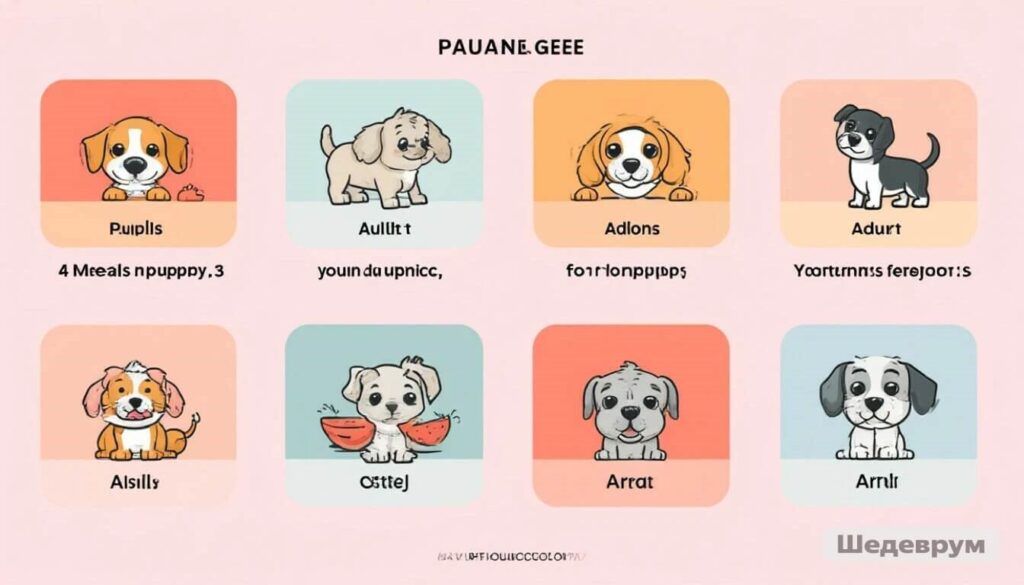
🐶 Puppies (Birth to 12 Months)
Puppies have tiny stomachs and high energy needs. Frequent small meals prevent blood sugar drops and support rapid growth .
| Age | Recommended Meals Per Day | Sample Schedule |
|---|---|---|
| 8–12 weeks | 4 meals | 7:00 AM, 12:00 PM, 5:00 PM, 9:00 PM |
| 3–6 months | 3 meals | 7:00 AM, 1:00 PM, 7:00 PM |
| 6–12 months | 2 meals | 8:00 AM, 6:00 PM |
The answer to how often should you feed a dog depends largely on their age.
Important notes for puppies:
- Toy and small breeds may need more frequent meals longer due to faster metabolisms and hypoglycemia risk
- Large and giant breeds benefit from staying on 3 meals until 12-18 months to support controlled growth and reduce bloat risk
- Puppies typically need to eliminate 15-20 minutes after eating—schedule potty breaks accordingly
For complete guidance on raising a healthy pup, see our Puppy Feeding Schedule by Age and Breed.
🐕 Adult Dogs (1 to 7 Years)
For most healthy adult dogs, two meals per day is the gold standard recommended by veterinarians .
| Feeding Option | Schedule | Best For |
|---|---|---|
| 2 meals | 8:00 AM and 6:00–8:00 PM | Most healthy adult dogs |
| 3 smaller meals | 8:00 AM, 1:00 PM, 8:00 PM | Highly active dogs, dogs prone to hunger-induced vomiting |
Key considerations for adults:
- Space meals evenly—aim for roughly 10-12 hours between feedings
- Post-meal potty break—adults usually need to eliminate within 30 minutes of eating
- Consistency matters more than exact timing—dogs adapt to your schedule as long as it’s predictable
Some recent research suggests that once-daily feeding might be associated with better health outcomes in some dogs, but most veterinarians still recommend at least two meals daily for optimal digestion and hunger management . Always consult your vet before switching to once-daily feeding.
👴 Senior Dogs (7+ Years)
Senior dogs can follow the same two-meal schedule as adults, but many benefit from adjustments .
Watch for: Decreased appetite, difficulty chewing, or changes in weight. Seniors with health conditions may need specialized feeding plans. See our guide on Best Dog Food for Senior Dogs.
Breed Size Matters: Special Considerations
Not all dogs are created equal. Size dramatically affects both feeding frequency and portion sizes .
Breed size also affects how often should you feed a dog; small breeds may need more frequent meals.
Bloat (GDV) warning: Deep-chested breeds (Great Danes, German Shepherds, Labs) are at higher risk. Feed 2-3 smaller meals daily, use slow-feed bowls, and never exercise immediately after eating .
How Much to Feed: Portion Control Guide
Frequency is only half the equation. You also need to know how much to feed at each meal.
Step 1: Start with the Bag (But Verify)
Every quality dog food includes a feeding guide based on weight. Use this as your starting point .
| Adult Dog Weight (lbs) | Daily Food (cups) | Meals per Day |
|---|---|---|
| 5–10 lbs | ½ – ¾ | 2 |
| 10–20 lbs | ¾ – 1½ | 2 |
| 20–50 lbs | 1½ – 3 | 2 |
| 50–100 lbs | 3 – 5 | 2 |
For more precise measurements, weigh your food using a kitchen scale. One “cup” can vary by up to 30% depending on how you scoop .
Step 2: Adjust for Your Dog’s Condition
The bag guide is a starting point. Monitor your dog’s Body Condition Score (BCS) :
| Sign | What It Means |
|---|---|
| Ribs easily felt, visible waist, tucked tummy | Ideal weight |
| Ribs buried under fat, no waist | Overweight—reduce portions by 10-15% |
| Ribs visible, no body fat | Underweight—increase portions by 10-15% |
Step 3: Account for Treats
Treats should never exceed 10% of daily calories . If you give treats, reduce meal portions accordingly.
For detailed portion guidance, see our How Much Should a Puppy Eat by Age? guide.
Scheduled Feeding vs. Free Feeding: What’s Better?
Most veterinarians strongly recommend scheduled feeding over free feeding for dogs .
Exceptions: Free feeding may be acceptable for some dogs under veterinary supervision, but for most, scheduled meals are healthier.
Sample Feeding Schedules by Age
Here are practical templates you can adapt to your lifestyle .
Puppy (8-12 weeks) – 4 meals
| Meal | Time |
|---|---|
| Breakfast | 7:00 AM |
| Lunch | 12:00 PM |
| Afternoon | 5:00 PM |
| Dinner | 9:00 PM |
These sample schedules show how often should you feed a dog at different life stages.
Puppy (3-6 months) – 3 meals
| Meal | Time |
|---|---|
| Breakfast | 8:00 AM |
| Afternoon | 2:00 PM |
| Dinner | 8:00 PM |
Adult/Senior – 2 meals
| Meal | Time |
|---|---|
| Breakfast | 8:00 AM |
| Dinner | 6:00–8:00 PM |
When to Consult Your Veterinarian
Contact your vet if you notice:
- Your dog refuses food for more than 24 hours (12 hours for puppies)
- Unexplained weight loss or gain
- Persistent vomiting or diarrhea after meals
- Excessive hunger accompanied by weight loss (may signal diabetes or malabsorption)
- Signs of bloat: restlessness, unsuccessful vomiting attempts, swollen abdomen—this is an emergency
For dogs with medical conditions like diabetes, pancreatitis, or kidney disease, feeding schedules must be individually prescribed by a veterinarian.
Frequently Asked Questions
Is it okay to feed my dog once a day?
For most healthy adult dogs, twice daily is recommended . Some research suggests once-daily feeding may have benefits, but it’s not right for every dog . Consult your vet before switching.
What’s the best time to feed my dog?
Choose times that work with your schedule and allow for post-meal potty breaks. Most owners feed once in the morning and once in the evening .
How long after eating do dogs poop?
Puppies: 15-20 minutes. Adults: 30 minutes on average .
Should I leave water out all day?
Yes—fresh water should always be available, even with scheduled meals.
Can I feed my dog at different times on weekends?
Dogs thrive on routine. Try to keep weekend meal times within 1-2 hours of weekday times to avoid digestive upset .
Conclusion
Feeding your dog on a consistent schedule is one of the simplest yet most powerful ways to support their health and happiness. For most dogs, two measured meals per day at the same times works best. Puppies need more frequent meals (3-4 daily), and seniors may benefit from adjustments based on their health.
Remember these key takeaways:
- ✅ Consistency—feed at the same times daily
- ✅ Measure portions—don’t guess, use a cup or scale
- ✅ Monitor body condition—adjust portions as needed
- ✅ Account for treats—they count toward daily calories
- ✅ Consult your vet—especially for puppies, seniors, or dogs with health conditions
A proper feeding routine isn’t just about preventing hunger—it’s about building a foundation for lifelong health.