Intro
New puppy checklist 2026 is essential reading for anyone bringing a new furry family member home. The first week with your puppy is a critical time for bonding, establishing routines, and setting the foundation for a lifetime of good behavior. Proper preparation—knowing what to buy, how to puppy-proof your home, and what to expect—can make the transition smooth and stress-free for both you and your new companion .
This comprehensive new puppy checklist 2026 guide covers everything you need to know before your puppy arrives and during those crucial first days. We’ll walk you through essential supplies, home preparation, the first vet visit, housetraining basics, crate training, and early socialization. Whether you’re a first-time owner or have had dogs before, this guide will help you start your journey on the right paw.
Before Your Puppy Arrives: Preparation Checklist
Essential Supplies
| Category | Items |
|---|---|
| Feeding | Stainless steel or ceramic bowls (one for food, one for water), high-quality puppy food (the same brand the breeder/shelter used), a few small bags of treats |
| Resting | Crate (appropriately sized for an adult dog, with a divider), soft bedding, puppy-safe blanket, cozy bed for outside the crate |
| Housetraining | Enzymatic cleaner, puppy pads (if you plan to use them), a leash and collar/harness, several poop bags |
| Grooming | Soft brush or comb, puppy-safe shampoo, nail clippers or grinder, toothbrush and puppy-safe toothpaste |
| Health | First aid kit, tick remover, records from breeder/shelter, list of emergency vet numbers |
| Identification | Collar with ID tag (your phone number), microchip registration (if not already done) |
| Safety | Baby gates, puppy-proofing supplies (cord covers, outlet covers), non-slip rugs on slippery floors |
| Play & Training | Variety of chew toys (rubber, rope, soft), interactive puzzle toys, a few soft toys for cuddling |
Veterinarians at AVMA recommend choosing a veterinarian before your puppy arrives and scheduling a wellness visit within the first few days.
Puppy-Proofing Your Home
Before your puppy arrives, walk through your home at puppy eye level and remove or secure:
- Electrical cords and outlets
- Toxic plants (lilies, sago palm, etc.)
- Medications, cleaning supplies, chemicals
- Small objects that could be swallowed
- Trash cans (get locking lids)
- Houseplants (some are toxic; elevate or remove)
- Block off stairs, balconies, and areas you don’t want your puppy to access
The First 24 Hours: Arrival and Adjustment
Bringing Your Puppy Home
- Ask for a blanket with mom’s scent to help with transition.
- Plan for a quiet arrival. Avoid overwhelming your puppy with visitors on the first day.
- Designate a safe space. Set up a crate or exercise pen in a quiet area with a comfy bed and toys. This will be their safe haven.
The First Vet Visit
Schedule a veterinary appointment within the first few days. The vet will:
- Perform a thorough physical exam
- Discuss vaccination schedule (See our Pet Vaccination Schedule 2026 guide)
- Discuss parasite prevention (See our Pet Parasite Prevention 2026 guide)
- Check for any congenital issues
- Provide guidance on nutrition and care
Introducing Your Puppy to Their New Home
- Let your puppy explore one room at a time. Don’t give them full run of the house immediately.
- Show them where their food, water, and bed are.
- Supervise constantly. If you can’t watch, use a crate or exercise pen.
- Use a calm, gentle voice. The first day is not the time for intensive training.
The First Week: Establishing Routines
Housetraining Basics
The key to successful housetraining is consistency and supervision. Remember: a puppy can hold it for approximately one hour per month of age (e.g., a 2-month-old can hold it for about 2 hours).
Potty Schedule:
- First thing in the morning
- After meals (15-30 minutes)
- After naps
- After play sessions
- Before bedtime
- Every 1-2 hours during the day
Tips:
- Take your puppy to the same spot each time. The scent encourages elimination.
- Use a cue word (“go potty”) and reward immediately with treats and praise.
- Clean accidents with an enzymatic cleaner to remove odors.
- Never punish accidents. If you find a mess, it’s too late. Clean it up and resolve to supervise better.
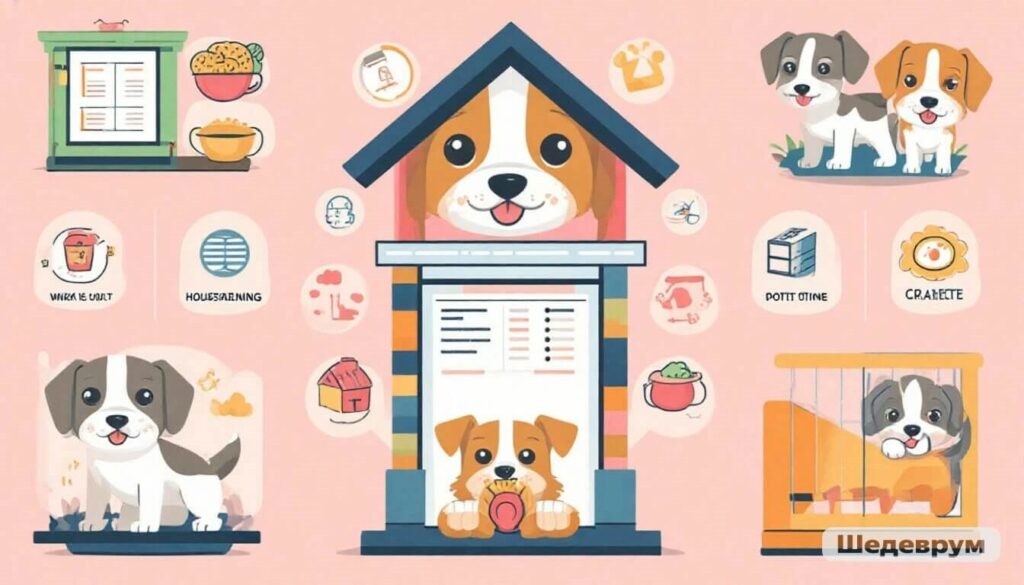
Crate Training
A crate becomes your puppy’s den—a safe, quiet space. Never use the crate as punishment.
How to Crate Train:
- Make it inviting: Leave the door open, put soft bedding inside, toss treats in.
- Feed meals in the crate: Build positive associations.
- Start with short periods: Close the door while you’re nearby, gradually increase duration.
- Practice at different times: Not just when you’re leaving.
- Establish a bedtime routine: A potty break, then into the crate with a safe chew toy.
Feeding
- Stick to the same food your puppy was eating before to avoid digestive upset.
- Feed three meals a day (for puppies under 6 months) at the same times each day.
- Measure portions according to the food label guidelines.
- See our How to Choose the Best Pet Food 2026 guide for selecting a high-quality diet.
- Always provide fresh water.
Socialization (3-16 Weeks: Critical Window)
The first 16 weeks are a critical socialization period. Expose your puppy to new experiences in a positive, controlled way.
Safe Socialization Ideas:
- Different people: Men, women, children, people in hats/uniforms.
- Other vaccinated, friendly dogs: Puppy classes, friends’ dogs.
- Various surfaces: Grass, carpet, hardwood, tile, gravel.
- Household sounds: Vacuum, doorbell, TV (at low volume).
- Handling: Gently touch paws, ears, mouth, and body.
- Car rides: Short, positive trips.
⚠️ Important: Keep your puppy away from unvaccinated dogs and high-traffic areas until they are fully vaccinated (around 16 weeks). Puppy classes with vaccination requirements are safe.
Basic Training Foundations
Name Recognition
- Say your puppy’s name in a happy, upbeat tone.
- When they look at you, say “yes!” and give a treat.
- Practice throughout the day.
Sit
- Hold a treat close to their nose.
- Slowly move it up and back over their head; their bottom will lower.
- The moment it touches the floor, say “yes!” and treat.
- Add the cue “sit.”
Come (Recall)
- Start in a quiet area.
- Say “come!” excitedly and run backward a few steps.
- When they reach you, give multiple treats and praise.
- Never call your puppy for something they dislike (like nail trims).
Leave It
- Hold a treat in a closed fist. Let them sniff and paw; ignore.
- The moment they back away, say “yes!” and give a treat from your other hand.
- Add the cue “leave it.”
Bite Inhibition
Puppies explore the world with their mouths and bite during play. This is normal and how they learn.
- Redirect to a toy. When they mouth you, offer a chew toy.
- Yelp “ouch!” and stop playing if they bite too hard. This mimics littermate communication.
- Use brief time-outs (30-60 seconds) if needed.
Health Essentials
Parasite Prevention
- Start flea, tick, and heartworm prevention as recommended by your vet (often starting at 8 weeks).
- See our Pet Parasite Prevention 2026 guide for details.
Vaccinations
- Puppies need a series of vaccines starting at 6-8 weeks, every 3-4 weeks until 16 weeks.
- Core vaccines: DHPP (distemper, hepatitis, parainfluenza, parvovirus) and rabies.
- See our Pet Vaccination Schedule 2026 guide for the complete schedule.
Grooming
- Brush your puppy daily to get them used to being handled.
- Introduce nail trims slowly. Use high-value treats. Cut only the tip.
- Start tooth brushing early. Use puppy-safe toothpaste. See our Pet Dental Health 2026 guide for techniques.

Common First-Week Challenges
Whining at Night
- Ensure your puppy has had a potty break right before bed.
- Place the crate in your bedroom so they can hear and smell you.
- Cover the crate with a light blanket (if they don’t chew it).
- If they cry, wait for a quiet moment before letting them out for a potty break (no play). Don’t give in to prolonged crying, or they’ll learn that crying gets them out.
Chewing
- Puppy-proof your home. Keep shoes, cords, and valuables out of reach.
- Provide plenty of appropriate chew toys. Rotate them to keep them interesting.
- Supervise or confine. When you can’t watch, use a crate or exercise pen.
Biting
- Redirect to a toy.
- Yelp and stop play. This is how puppies learn bite inhibition from their littermates.
- Ensure your puppy is getting enough rest. Overtired puppies are often nippier.
Fearfulness
- Go slowly. Don’t force your puppy into scary situations.
- Use high-value treats to create positive associations.
- Give them a safe space to retreat to (their crate).
- Consult a positive reinforcement trainer if fear persists.
Frequently Asked Questions
What should I feed my new puppy?
Feed a high-quality puppy food (formulated for growth). Stick to the same brand the breeder/shelter used initially, then transition slowly if you want to change. Feed 3 meals daily for puppies under 6 months.
How often should I take my puppy out to potty?
Every 1-2 hours during the day, and always after waking, eating, playing, and napping. Overnight, a general rule is one hour per month of age (but puppies may need more frequent breaks).
When can my puppy go outside?
You can take your puppy outside in your own yard immediately. Avoid high-traffic areas (parks, sidewalks) until they are fully vaccinated (around 16 weeks). Puppy classes with vaccination requirements are safe.
How do I stop my puppy from biting?
Redirect to a toy, yelp and stop play when they bite too hard, and ensure they are getting enough rest (overtired puppies bite more). This is normal behavior that they will outgrow with consistent guidance.
Should I let my puppy sleep in bed with me?
It’s safest to crate train your puppy initially. This aids housetraining and prevents nighttime accidents or injuries. You can allow bed-sleeping later when your puppy is reliably housetrained and has good manners.
When should I start training my puppy?
You can start the moment you bring your puppy home! Focus on name recognition, housetraining, and positive handling in the first week. Basic commands can be introduced in short, fun sessions.
What vaccines does my puppy need?
Puppies need a series of core vaccines (DHPP) starting at 6-8 weeks, repeated every 3-4 weeks until 16 weeks, and a rabies vaccine at 12-16 weeks. Your vet will create a schedule.
Conclusion
New puppy checklist 2026 provides a roadmap for a successful first week and beyond. By preparing your home, gathering essential supplies, establishing routines, and focusing on positive training methods, you’ll set your puppy up for a lifetime of good health and behavior.
The first week is a whirlwind of excitement, sleepless nights, and countless potty breaks—but also the beginning of a beautiful bond. Be patient, consistent, and kind. This new puppy checklist 2026 guide is your starting point for a wonderful journey together. We hope this new puppy checklist 2026 helps you and your new furry friend start off on the right paw.
For more information on raising a healthy, happy puppy, check out our other guides: